

A rhizomatic cartography of non-formal refugee education: Exploring &
transforming eduscapes in hosting centers for unaccompanied
minors
–
Rhizomatic eduscapes
A research project supported by the Hellenic Foundation for Research & Innovation (H.F.R.I.)
Objectives and philosophy of the RHIZO-EDUSCAPES project
- The RHIZO-EDUSCAPES project aims to re-imagine learning spaces for unaccompanied minors.
- By conducting field research and educational alternative interventions in five facilities for unaccompanied minors located in different cities in Greece, such as Athens, Volos, Thessaloniki, and Kozani.
- Utilizing the innovative method of rhizomatic cartography, our goal is to map and reshape the institutional culture within unaccompanied minor facilities.
- Our main objective is to create bridges with formal education, resulting in educational and language policy proposals that have been developed through an intercultural perspective and are inspired by a sociolinguistic justice approach.
Research team
36 researchers divided into 6 sub-groups that collaborate and interact
The project’s research team is coordinated by the Principal Investigator of the project, Dr. Roula Kitsiou, Assistant Professor of Sociolinguistics at the Department of Language & Intercultural Studies of the University of Thessaly, and includes members of the academic community (faculty members, [post]doctoral and master’s students); teachers who teach Greek as a second language in accommodation facilities; refugees (former unaccompanied minors who lived in accommodation facilities and are now undergraduate students) who are expected to serve as role models/success stories and inspiration for unaccompanied minors.
Research
Qualitative research with innovative methods (linguistic ethnography, rhizomatic cartography)
Research in the RHIZO-EDUSCAPES project—as a set of practices and interactions—follows successive stages aimed at exploring and reshaping educational linguistic landscapes in hosting facilities for unaccompanied minors (literature review, field mapping, research tools for data collection and analysis, training of novice researchers, and development of a guide to research ethics). Using innovative methods, practices, and tools, research ethics play a significant role in the whole project.
News


–
Actions
The project’s activities, following the research, include interventions in hospitality facilities for unaccompanied minors with the aim of promoting diversity and transforming institutional culture. Indicatively:
• cartographic storytelling (Cartographic books)
• digital storytelling that will encourage them to express their voice digitally (YouTube channel).
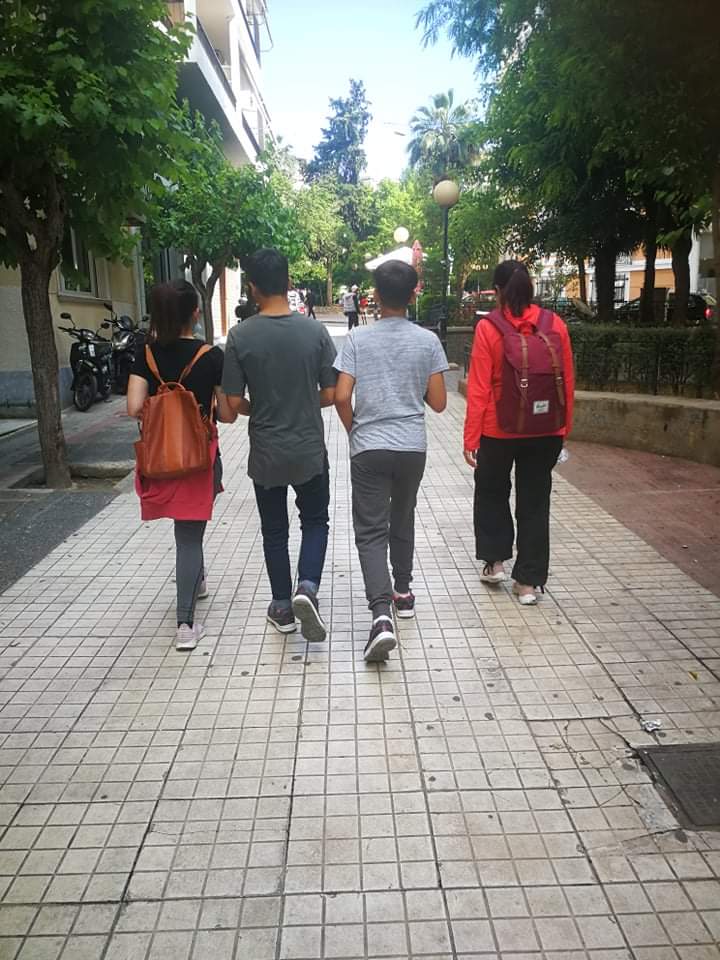
• linguistic landscape walks (critical walking tours in the neighbourhood, within the city, and on the routes they take to get to school).
• digital translingual cafés (in hospitality centers, at the university, or in other public spaces)
• exhibition with individual and collective artefacts produced during the interventions.