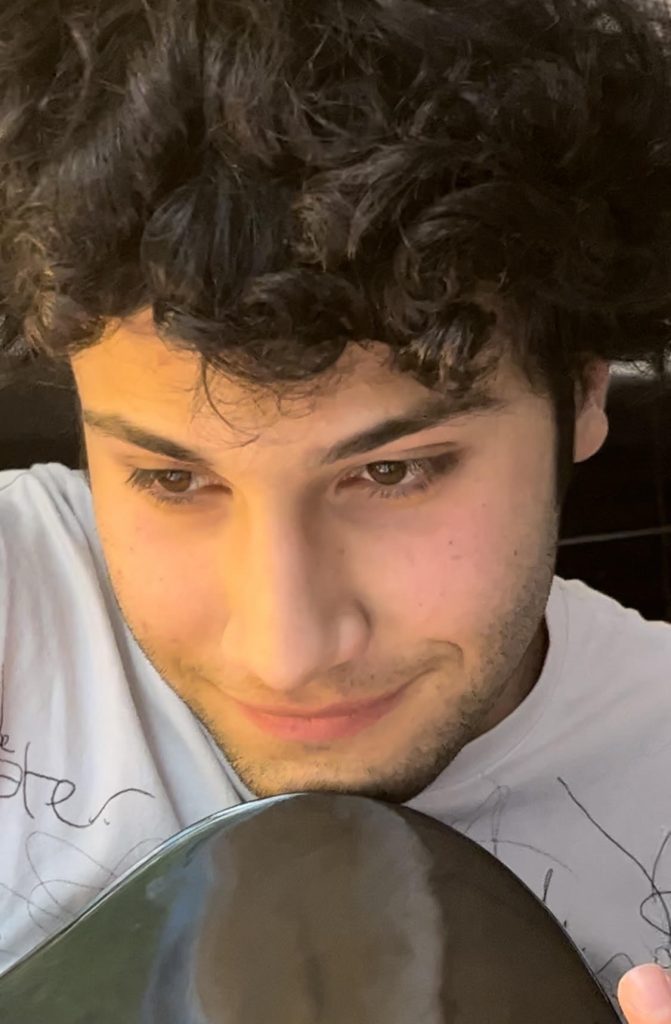


My name is Ammar Abu Assaf, and I am from Syria. I came to Greece in 2019 with the aim of completing my studies and escaping the war that was raging at the time. I completed my secondary education at the Intercultural Lyceum in Elliniko, took the Panhellenic exams, and later received a scholarship to Deree American College in Athens. I am now a second-year student in the Department of Biomedical Sciences and am also pursuing a minor in Theater. I love music, especially opera, and consider myself quite sociable.
While waiting for my asylum application to be processed and the necessary documents to be issued, I spent my first years in Greece in a refugee camp. I lived there for three years—it is one of the few good facilities in Athens—sharing accommodation with about 40 unaccompanied minors from various countries. We learned Greek and English, not only because we wanted to learn, but also because several teachers at the facility were genuinely interested in teaching us new things. One of them was Mr. Drakatos Kosmas, who, as a teacher, personally helped me —as an Arabic speaker— to discover every little similarity and difference between the Arabic and Greek languages.
In contrast, in other facilities I visited, teachers had no contact with the main objective of educating unaccompanied refugee and migrant minors: teaching Greek as a foreign language. I remember that in one of these facilities, an employee performed the duties of both caregiver and teacher, without offering meaningful and effective help to the children.
Life in camps helped me develop a deep sense of trust and communication. Children who spoke Farsi, Punjabi, Urdu, Babara, and Soninke managed to communicate with each other through a common language, Arabic. This phenomenon can be explained in part by the fact that most of them were Muslims and shared their faith in the Koran, which is written in Arabic. It was not necessary to know the language in depth — the basics were enough. In contrast, for example, to Christians: although the Bible is written in ancient Greek, most Christians in the world do not know the ancient Greek language.
I firmly believe that Rhizo-eduscapes is one of the most meaningful and successful projects, which can contribute significantly to rebuilding educational infrastructure in areas that remain in the dark.
Ammar Abou Asaf