


Milestone: 1st Workshop on Ethical & Bureaucratic Aspects of Working with Unaccompanied Minors
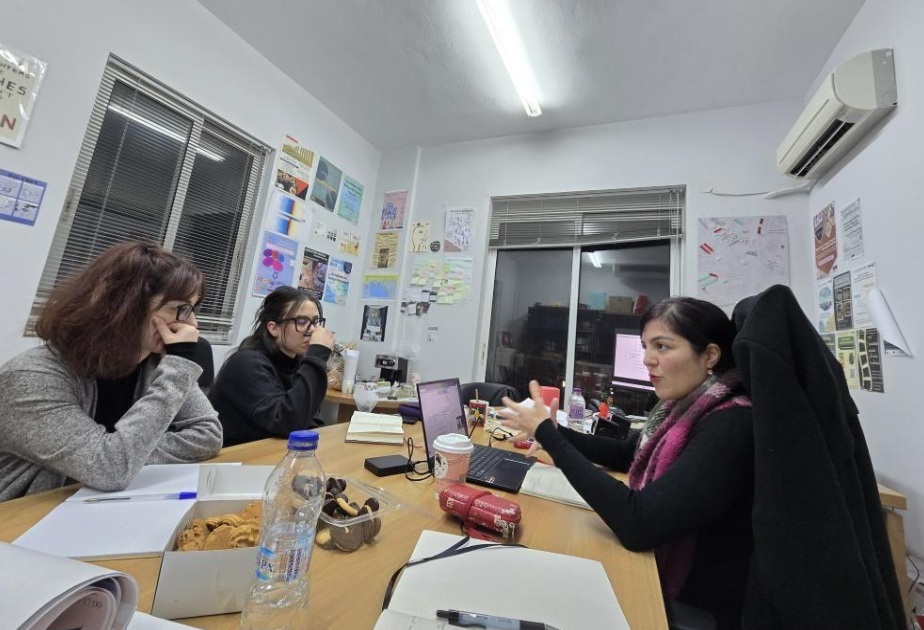
The 1st Workshop on ethical and bureaucratic aspects in research with unaccompanied minors, held on January 14, 2026, at the University of Thessaly in Volos, with the option of hybrid participation, constituted the first organized training seminar of the Rhizo-Eduscapes research team on issues of ethics and bureaucracy in the field of research. The meeting was designed as a space for introduction, understanding, and collective reflection on the complex ethical, institutional, and practical dimensions of conducting research with unaccompanied minor children, with particular emphasis on the role of field researchers in Accommodation Centers.
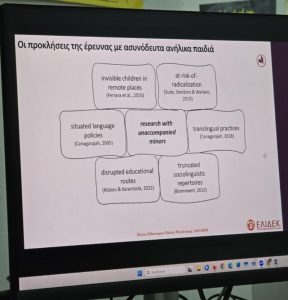
The meeting began with an introduction to the ethics and deontology of sociolinguistic and educational research, drawing on contemporary theoretical approaches such as the ethics of care and the concept of self-care. Through the discussion, the importance of self-awareness, personal writing, and the researcher’s continuous reflexive stance was highlighted, as well as the need to build relationships of trust in the field. At the same time, particular emphasis was placed on the multiple roles that the researcher is called upon to assume, as well as on the significance of emergent ethics—that is, ethics shaped through the very conditions of the research process.
Subsequently, the discussion was connected to the real conditions of the field and the challenges that arise, such as the difficulty of accessing accommodation structures, the complexity of their organization, the fluidity of populations, and the need to protect unaccompanied minors from representations that may attribute stereotypical characteristics to them. In this context, guidelines were provided for researchers’ stance in the field. Particular emphasis was placed on the concept of place-based ethics or ethics-in-place, as well as pragmatic ethics, which approach ethics not as an abstract set of rules but as a process directly linked to place, bodies, and the material conditions of research.
The workshop also highlighted the multiple bureaucratic and institutional challenges involved in research with unaccompanied minors. Through the discussion of key concepts from the literature, such as “invisible” and “disappearing” children, the risks faced by these populations were underscored, along with the complex procedures they undergo from the moment of their arrival in Europe to their integration into accommodation structures. Special attention was given to the bureaucratic processes that determine access to rights, as well as to the tensions arising from language policies within these structures and the role of interpretation.
At the same time, issues concerning the functioning of institutional frameworks were discussed, particularly the role of the Research Ethics and Deontology Committee (REDC), highlighting the need for further in-depth understanding of the procedures governing social research, as well as the potential for shaping a more flexible and supportive institutional culture.
The final part of the workshop focused on scenarios of ethical dilemmas, based on real or possible field conditions. The discussion demonstrated that ethics does not constitute a static framework but rather a field of negotiation that requires continuous reflexivity and collective processing. The reflection that followed enabled participants to connect theoretical concepts with personal experiences from different research and professional contexts, highlighting the complexity and interaction of factors that shape research with vulnerable populations. Particular emphasis was placed on the importance of individual and collective responsibility, as well as on the need for ongoing reflexive practice in the production of knowledge.
Overall, the workshop constituted a crucial first step toward establishing a shared ethical foundation within the framework of the Rhizo-Eduscapes project, strengthening the link between theory and practice and laying the groundwork for a conscious, responsible, and interculturally sensitive research stance toward unaccompanied minors and the environments in which they live and act.